As the core load-bearing component for the slewing motion of excavators, the slewing bearing bears the full load of the boom, bucket and cab. Improper selection will cause abnormal noise and oil leakage in mild cases, and lead to gear ring fracture and complete machine shutdown for maintenance in severe cases. As the world's leading excavator brands, Caterpillar (CAT), Komatsu and Hitachi have obvious differences in mounting dimensions, tooth module and bolt torque of their original slewing bearings. Many maintenance purchasers only select products by tonnage and ignore brand-specific parameters, resulting in non-interchangeable parts and frequent assembly failures. This article analyzes the core selection points of the three major brands, together with interchangeability comparison logic, to help you avoid selection blind spots.
1. Tooth Profile and Module (The Most Common Pitfall)
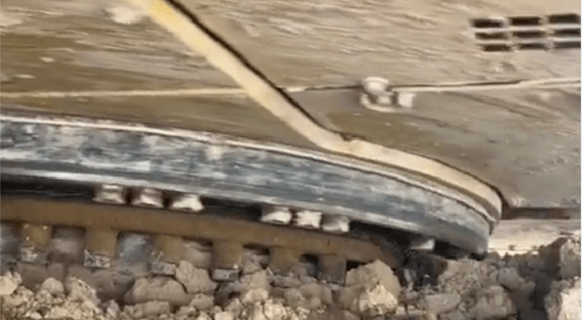
All CAT excavators are equipped with standard external gear slewing bearings. The tooth module adopts unified imported standard, with reinforced heat treatment at the tooth root to match the output gear of the original slewing motor. The tooth surface quenching depth reaches 2.5-3mm, delivering stronger fatigue resistance under heavy-duty crushing conditions.
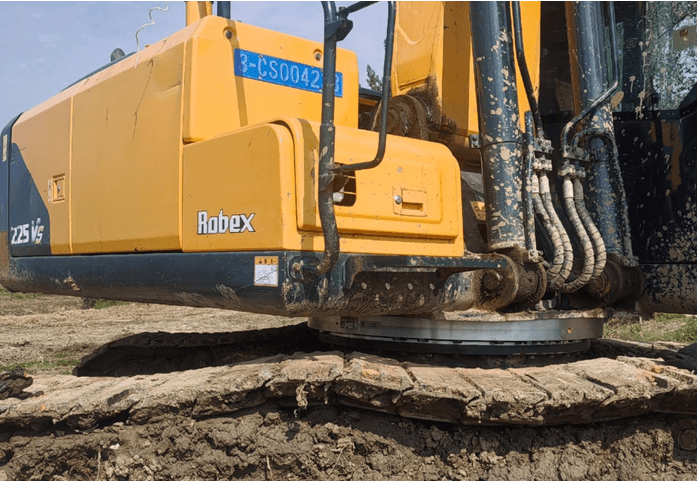
Komatsu provides both external and internal gear types: external gear structure is mostly used for 6-20 ton medium and small tonnage models, while internal gear design is adopted for heavy-duty models above 30 tons. Under the same tonnage, its module is 0.5 specification smaller than that of CAT. Direct replacement will cause excessive gear meshing clearance, tooth knocking and abnormal noise.
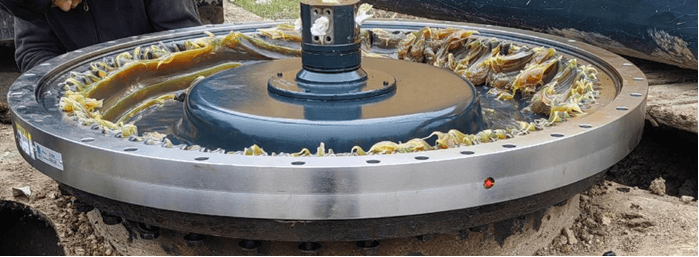
Hitachi adopts an exclusive involute tooth profile with brand-specific addendum chamfer dimensions, and its module is between that of CAT and Komatsu. The original motor gear cannot match CAT slewing bearings. Forced assembly will accelerate gear wear, and tooth surface spalling usually occurs within 300 working hours.
> First principle of selection: For different brands with the same tonnage, tooth module and tooth profile are not universal and cannot be directly interchanged.
2. Differences in Mounting Dimension Standards
The distribution of bolt holes, outer diameter of inner ring, total thickness and positioning spigot are the basic parameters for assembly, and the standards of the three brands are completely incompatible:
CAT excavator slewing bearings have evenly distributed even-numbered bolt holes, 8mm spigot height and thicker flange, suitable for heavy-duty mining conditions.
Komatsu has asymmetrically spaced bolt holes, only 5mm spigot height and weight-reduced flange design, more suitable for light-duty earthwork operations.
Hitachi adopts eccentric positioning spigot, and the position of the inner ring lubricating oil channel is opposite to the other two brands. Ignoring the oil channel position will lead to insufficient lubrication after assembly and rapid raceway wear.
2. Bolt Torque Standards Directly Determine the Service Life of Bearings
Bolt torque is a detail that is easily ignored. Excessive torque will crack the flange, while insufficient torque will cause the bearing to loosen during operation, and the offset raceway clearance will cause eccentric wear:
CAT original standard: The torque of M24 fastening bolts is 820N·m, tightened diagonally and evenly in three stages.
Komatsu specification: The torque of M24 bolts of the same specification is 710N·m, and one-time locking is strictly prohibited.
Hitachi requirement: The bolt torque is 760N·m, and high-temperature resistant anti-seize lubricant must be applied to the threads before assembly.
80% of slewing jitter during test run after bearing replacement is caused by unqualified bolt torque. When replacing with aftermarket parts, you cannot copy the torque standard of a single brand, but must strictly follow the construction specifications of the corresponding excavator brand.
3. Brand Interchangeability Logic to Reduce Parts Inventory Cost
Many parts dealers and repair workshops expect one bearing to fit multiple brands of excavators. Here are the clear prerequisites for interchangeability:
Only products with the same tonnage, same gear type and consistent mounting dimensions can be modified for interchangeability, requiring matching replacement of slewing motor gears and adjustment of shims.
CAT bearings cannot directly replace Komatsu internal gear models. Komatsu external gear models can be adapted to Hitachi 20-ton class models through custom shims, but interchange is not recommended under crushing heavy-duty conditions.
For high-frequency heavy-duty mining scenarios, original slewing bearings of the same brand are preferred. Modified interchangeable products have a 15%-20% lower load limit and double the failure rate in long-term use.
For light earthwork and short-term rental equipment, customized universal models can be used, but the three core parameters of module, mounting holes and oil channel must be verified, and the bolt torque standard must be adjusted accordingly.
4. Summary of Selection Pitfall Avoidance
Do not select products only by excavator tonnage. Different brands with the same tonnage mostly have non-universal tooth profiles and mounting dimensions.
Necessary information for procurement: complete machine brand and model, internal/external gear type of slewing bearing, module, flange thickness, and bolt specification.
Assembly must strictly follow the bolt torque specifications of the corresponding brand, with staged diagonal tightening.
5.For heavy-duty crushing and long-term mining operations, original matching models are preferred, and blind cross-brand interchange should be avoided.
When purchasing aftermarket parts, confirm the heat treatment process, and the quenching layer thickness of raceway and tooth surface must meet original standards to avoid short-term damage.
As the core vulnerable load-bearing part of excavators, the selection accuracy of slewing bearings directly affects the overall operation and maintenance cost. Mastering the three core indicators of tooth module, mounting dimension and bolt torque, and verifying parameters with interchangeability comparison logic, will help you select suitable and durable slewing bearings and reduce additional losses caused by rework and shutdown.