Excessive axial and radial clearance of excavator slewing bearings is a common failure. Oversized clearance causes cab shaking, impact noise during slewing, unilateral gear wear and force offset while digging. In severe cases, it leads to large-area raceway spalling and tooth root fracture. Many maintenance workers only retighten bolts simply, failing to solve the clearance problem fundamentally. This article distinguishes visual symptoms of axial and radial clearance, sorts out five core inducements: insufficient bolt preload, lubrication failure, metal fatigue, long-term overload and raceway abrasion, matched with standardized inspection procedures and graded repair solutions to eliminate clearance faults rapidly.
1. Distinction Between Axial and Radial Clearance Symptoms
Excessive Axial Clearance (Vertical Play)
- Obvious vertical play when pushing/pulling the cab manually under shutdown state;
- Loud knocking impact when lifting or lowering the arm;
- Temporary relief after greasing, shaking recurs after several hours of operation;
- Heavy grease overflow on one side of seals, dust lips flip and deform repeatedly.
Excessive Radial Clearance (Horizontal Swing)
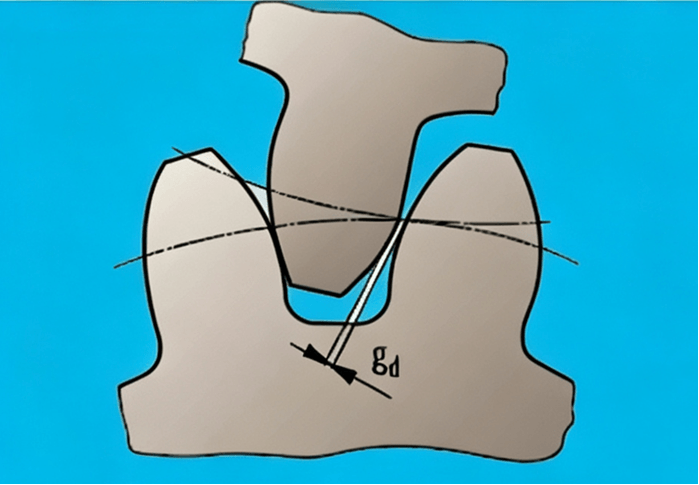
- Visible horizontal swing during left-right slewing, vibration worsens under turning inertia;
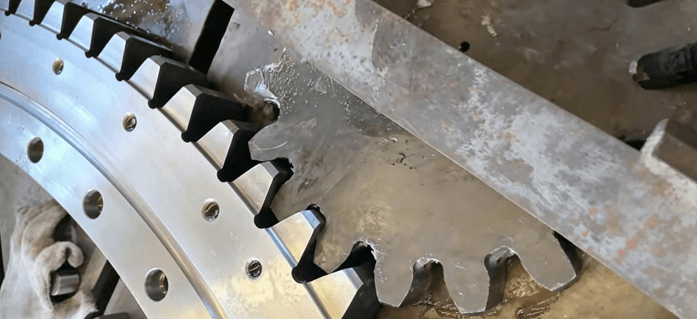
- Full-circle gear backlash difference exceeds standard, fixed-point meshing impact noise;
- Cab shifts heavily to the loaded side during heavy digging;
- Fast unilateral wear of drive pinion, stepped abrasion marks on tooth surface.
2. Five Main Causes of Excessive Slewing Clearance
1. Insufficient Bolt Preload and Stress Relaxation
Long-term vibration and alternating loads reduce bolt torque, creating gaps between upper and lower flanges and vertical play. Bolts relax faster under outdoor and crushing working conditions.
2. Lack of Lubrication Causing Dry Raceway Wear
Failure to refill matched grease on schedule, broken seals letting sediment in. Steel balls and raceways run dry without protective oil film, raceway surface thins and internal clearance expands continuously.
3. Metal Fatigue of Raceways and Steel Balls
Long service life and cyclic stress lead to raceway pitting spalling and out-of-round deformed steel balls. Rolling clearance increases irreversibly, a permanent hardware damage.
4. Long-Term Overload and Rough Operation Accelerating Abrasion
Frequent overloaded digging, violent stick swinging and sudden slewing start/stop bring instantaneous impact loads, speeding up raceway and gear ring wear and widening clearance rapidly.
5. Flange Flatness Deformation and Installation Misalignment
Deformed mounting flanges and poor centering cause uneven bearing load, concentrated abrasion on partial raceways and unilateral excessive clearance.
3. Standard Clearance Inspection Procedures
Axial Clearance Test: Park machine level, fix dial indicator on lower frame with probe vertical against upper chassis. Pry cab up and down manually, read maximum dial difference; clearance over 0.3mm above factory standard is out of tolerance.
Radial Clearance Test: Place dial indicator against gear ring outer circle, push cab left and right to record radial runout difference. Recheck gear backlash at multiple points with feeler gauges to judge wear degree.
Bolt Torque Recheck: Re-measure torque of all M16/M20/M24 fixing bolts diagonally in stages, mark bolts with torque attenuation over 15%.
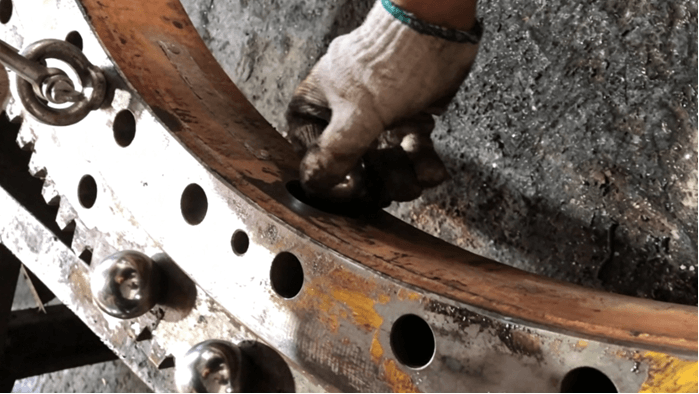
Visual Raceway Inspection: Disassemble one seal cover to check raceway for abrasion, pitting and metal debris, distinguish lubrication wear from fatigue damage.
4. Graded Repair Solutions by Damage Severity
Minor Excess (Only Loose Bolts, No Raceway Pitting)
Retighten all bolts diagonally to rated torque; fully refill fresh grease; shorten lubrication interval to 100 working hours and recheck bolt torque quarterly.
Moderate Excess (Slight Raceway Abrasion, No Large Spalling)
Replace all seals; thoroughly clean raceway debris and fill extreme-pressure grease; straighten deformed mounting flanges; forbid overload and sudden slewing, test clearance monthly.
Severe Excess (Raceway Pitting, Deformed Balls, Clearance Over 0.8mm)
Irreversible fatigue damage to raceways and rolling elements cannot be repaired to original precision. Full slewing bearing replacement is mandatory; straighten upper/lower mounting flanges simultaneously to prevent repeated premature wear of new bearing.
5. Long-Term Prevention Reminders
- Forbid long-term overloaded digging and sudden slewing braking to reduce instantaneous impact loads;
- Strictly implement 24h/100h/500h bolt torque recheck rules;
- Refill grease of matched NLGI grade on schedule and replace aged seals timely;
- Manually rotate full circle monthly for outdoor machines to release static stress and avoid unilateral indentation wear.
Summary
Excessive slewing clearance of excavators is divided into vertical axial play and horizontal radial swing, mainly caused by loose bolts, insufficient lubrication, metal fatigue, overload operation and flange deformation. Accurate dial indicator testing grades damage severity: minor faults only need retightening and greasing, moderate ones require cleaning and seal replacement, severe cases need full bearing replacement. Combined with regular maintenance rules, clearance can be controlled effectively, bearing service life extended, and costly downtime from gear fracture and raceway spalling avoided.
About BRISK: 13 years OEM-compatible slewing bearings and construction machinery parts. Visit https://www.briskslewing.com | Contact: [email protected]