As the core rotary load-bearing component of construction machinery, standard slewing bearings are only suitable for normal conditions with normal temperature, dry environment and low dust. In extreme scenarios such as high-temperature metallurgy, dusty mines, submerged dredging and extreme cold outdoors, ordinary bearings will quickly suffer from grease carbonization, seal damage, raceway corrosion and tooth surface brittle fracture, with service life only 1/3 or even lower than that under normal conditions. For four typical special working conditions, customized solutions from three core dimensions of material selection, lubrication scheme and sealing design, matched with corresponding safety factors, can ensure long-term stable operation of equipment.
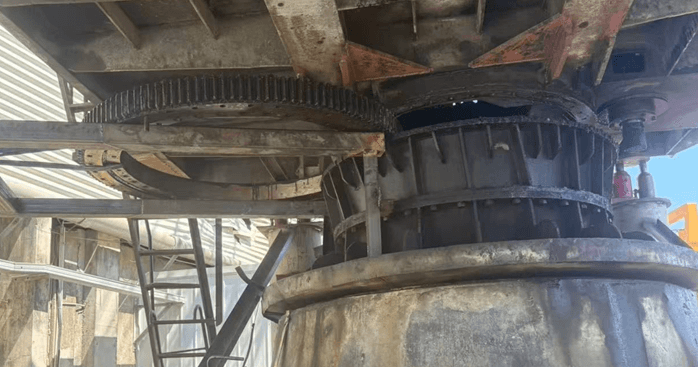
1. Special Selection Solutions for Four Extreme Working Conditions
1. High Temperature Conditions (Metallurgy, Coking & Foundry Equipment)
Working characteristics
Ambient temperature stays above 80℃ for a long time, with short-term peak up to 150℃. Ordinary grease is prone to carbonization failure, and steel is prone to thermal fatigue deformation.
Material solution
Main body adopts tempered high-temperature resistant 50Mn alloy steel; raceway and tooth surface adopt high-temperature quenching process with quenching layer depth ≥3mm; cage adopts tin-bronze alloy to avoid high-temperature seizure; fastening bolts adopt high-temperature resistant high-strength alloy steel.
Lubrication solution
Polyurea-based high-temperature grease with dropping point ≥280℃,
which can work stably for a long time at 180℃ and effectively avoid grease carbonization and coking.
- **Sealing solution**: Fluororubber (FKM) double-lip sealing ring with temperature resistance from -30℃ to 220℃, matched with metal dust retaining ring to block high-temperature dust intrusion.
- Design key: Thermal expansion compensation clearance is reserved in the structure to avoid component expansion and jamming at high temperature, which causes abnormal increase of slewing resistance.
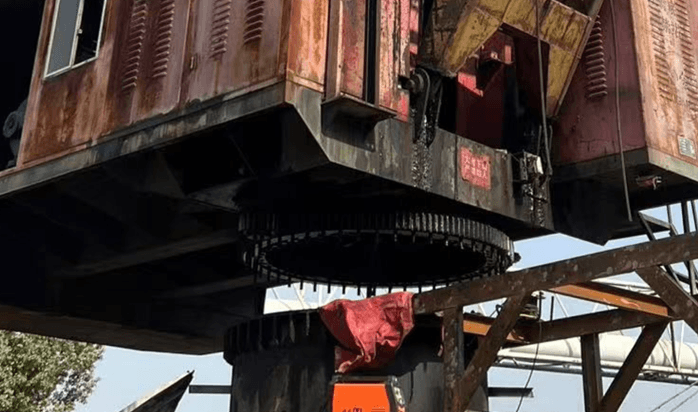
2. Heavy Dust Conditions (Mining, Quarry & Cement Plant Equipment)
Working characteristics
High concentration of sand and cement dust in the environment. Hard particles easily intrude into raceway and tooth surface, causing abrasive wear and accelerating component failure.
Material solution
Deep quenching + surface strengthening treatment on raceway and tooth surface, with surface hardness above HRC60, greatly improving wear resistance; outer ring surface is treated with wear-resistant coating to resist long-term dust erosion.
Lubrication solution
Extreme pressure lithium-based grease with anti-wear extreme pressure additives, forming a thick oil film to isolate dust particles; grease replenishment interval shall be shortened, recommended once every 100 working hours.
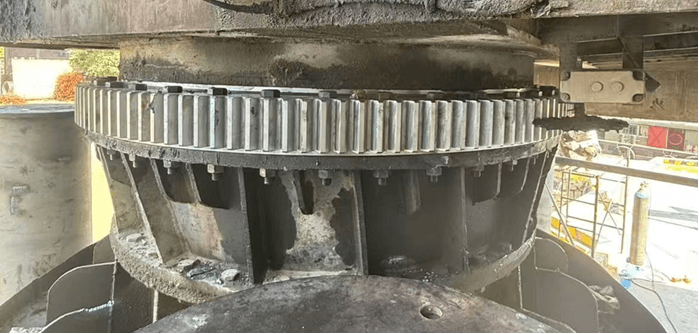
Sealing solution
Three-stage protection structure of "labyrinth seal + double-lip contact seal + outer dust cover", which blocks large gravel and fine dust step by step from outside to inside. It is the core protection design for heavy dust scenarios.
3. Submerged Conditions (Dredgers, Underwater Excavators & Offshore Platform Equipment)
Working characteristics
Long-term contact with fresh water or seawater, prone to rust and electrochemical corrosion. Sediment intruding into raceway with water will cause severe wear failure.
Material solution
Main body adopts corrosion-resistant alloy steel, and key parts are treated with hot-dip galvanizing or zinc spraying for anti-corrosion; bolts and fasteners adopt 316 stainless steel to resist seawater electrochemical corrosion; raceway is treated with anti-rust passivation.
-
Lubrication solution:
Waterproof composite lithium-based grease with excellent water washout resistance, no loss under long-term water immersion; closed oil bath lubrication system can be adopted for deep-water high-pressure scenarios.
Sealing solution:
Multi-stage waterproof structure of "V-type combined seal + double-lip waterproof seal + end face gland", with waterproof rubber ring added at static seal to completely block water and sediment intrusion.
4. Extreme Cold Conditions (High-altitude Mines & Cold-region Construction Machinery)
Working characteristics:
Ambient temperature stays below -30℃ for a long time. Ordinary steel has reduced toughness and is prone to brittle fracture; grease solidifies and loses fluidity; seals harden and fail.
-Material solution:
Main body adopts 42CrMo alloy steel with excellent low-temperature toughness, verified by -40℃ low-temperature impact toughness test before delivery; raceway adopts low-temperature quenching process to avoid low-temperature brittle fracture.
Lubrication solution:
Synthetic low-temperature grease with synthetic hydrocarbon base oil, pour point ≤-50℃, ensuring good fluidity and lubrication performance even at -40℃.
-
Sealing solution:
Low-temperature resistant silicone rubber or low-temperature nitrile rubber sealing ring, which maintains good elasticity at -45℃, no hardening or brittle fracture, and continuously maintains sealing performance.
- Design key: Cold shrinkage compensation clearance is reserved to avoid gear meshing too tight and slewing jamming caused by component shrinkage at low temperature.
|
Condition Type |
Material Safety Factor |
Recommended Lubrication Interval |
Sealing Protection Level |
Recommended Overall Safety Factor |
|
High Temperature |
≥1.3 |
Every 150 working hours |
3-stage high-temperature seal |
≥1.5 |
|
Heavy Dust |
≥1.2 |
Every 100 working hours |
3-stage dust-proof seal |
≥1.4 |
|
Submerged |
≥1.4 |
Every 200 working hours |
Multi-stage waterproof seal |
≥1.6 |
|
Extreme Cold |
≥1.3 |
Every 250 working hours |
Cold-resistant double-lip seal |
≥1.5 |
3. Key Selection Reminders
Many users still choose standard slewing bearings under special working conditions and only extend service life by increasing maintenance frequency, which treats the symptoms but not the root cause. In extreme environments, materials, lubrication and sealing must be customized simultaneously, and none is dispensable: high-temperature resistant materials matched with ordinary grease will quickly carbonize and fail; upgrading only seals in heavy dust scenarios will still cause rapid wear due to insufficient raceway hardness.
In addition, safety factor is the core index for selection under extreme conditions. The selection safety factor for all special scenarios must be more than 15% higher than that under normal conditions. Selection cannot be based on conventional load standards, otherwise sudden fracture, jamming and other safety accidents are very likely to occur.
Overall, the core logic of slewing bearing selection for special working conditions is "environment adaptation and redundant protection". Precisely matching special solutions for four scenarios of high temperature, heavy dust, submerged and extreme cold, and upgrading selection grade according to the safety factor table, can effectively reduce failure risk and greatly improve equipment service life and operation reliability in extreme environments.