Gear surface wear is a frequent failure of slewing bearings. Long-term heavy impact load, insufficient lubrication, improper gear backlash and sediment intrusion will lead to gear scuffing, pitting, stepped abrasion and even tooth root cracks. Many maintenance workers only replenish grease temporarily, resulting in continuous wear deterioration and gear fracture shutdown eventually. This article compares three mainstream solutions: on-site emergency repair, workshop precision repair and full bearing replacement for raceway spalling, analyzing applicable scenarios, operation procedures, repair precision and service life to help maintenance staff select the optimal repair plan quickly.
1. Plan 1: On-Site Surfacing Repair (Mild Gear Wear)
Applicable Damage Standard
Only slight pitting and shallow scratches on gear surface, no tooth root cracks or large-area spalling, tooth thickness wear ≤15%; construction site equipment with tight schedule unable to be disassembled for factory overhaul.
Complete Operation Process
- Thoroughly clean grease, sediment and old anti-rust grease on gear surface, grind welding area to expose metal substrate;
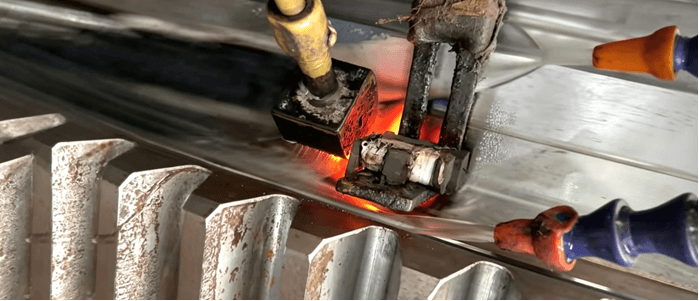
- Preheat gear ring welding position, use special wear-resistant gear welding rod for layered surfacing to fill worn pits;
- Polish manually and re-measure gear backlash with feeler gauges to adjust to standard range matching module;
- Evenly coat extreme-pressure grease on full gear surface, run forward and backward no-load for 30 minutes running-in.
Pros & Cons
- Advantages: No need to disassemble slewing bearing, on-site construction, low repair cost and short downtime;
- Disadvantages: Limited manual surfacing precision, insufficient heat treatment easily causes internal stress, service life after repair is only 40%~50% of new products, only for short-term transition.
2. Plan 2: Workshop Precision Machining Repair (Moderate Gear Wear)
Applicable Damage Standard
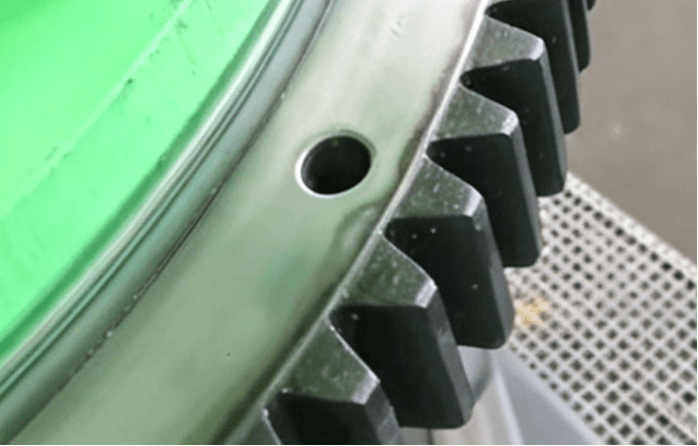
Stepped abrasion and moderate pitting on gear surface, tooth thickness wear 15%~30%, no penetrating tooth root cracks; machine can be disassembled for shutdown, engineering and lifting equipment requiring medium-long term stable operation.
Complete Operation Process
- Disassemble the whole machine and remove slewing bearing to professional heat treatment workshop;
- Low-temperature stress relief annealing to eliminate fatigue internal stress of gear ring, CNC milling to grind reference surface of worn gear;
- Secondary precise CNC finishing after wear-resistant alloy surfacing to restore original tooth profile, module and backlash;
- Overall low-temperature tempering, ultrasonic flaw detection for hidden tooth root cracks, replace full set of seals, clean raceways and fill fresh grease.
Pros & Cons
- Advantages: High tooth profile precision by CNC machining, complete supporting heat treatment, service life after repair reaches 70%~80% of new bearings with high cost performance;
- Disadvantages: Whole machine disassembly and transportation required, downtime 3~7 days, higher cost than on-site surfacing.
3. Plan 3: Full Slewing Bearing Replacement (Severe Gear Wear and Raceway Spalling)
Applicable Damage Standard
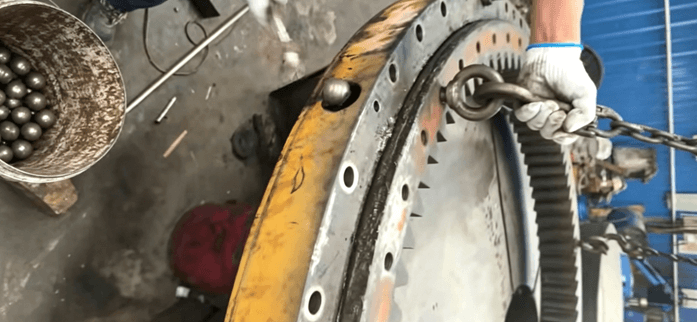
Tooth thickness wear >30%, tooth root cracks, large-area gear pitting spalling; accompanied by raceway pitting, deformed steel balls, seriously excessive axial/radial clearance; mining heavy-load and crushing high-impact equipment.
Complete Operation Process
- Remove all connecting bolts diagonally in stages, lift upper assembly and dismantle old bearing;
- Grind and clean upper/lower mounting flanges, correct flatness deviation;
- Hoist new slewing bearing of identical specification, align grease nipples and gear meshing position;
- Tighten bolts diagonally in three stages to rated torque, recheck gear backlash;
- Inject matching grease at multiple points, carry out graded test run under no-load, light load and full load to inspect noise and clearance.
Pros & Cons
- Advantages: Full compliance of tooth and raceway precision for new bearing, service life consistent with original new product without hidden fault risks;
- Disadvantages: Highest comprehensive cost of procurement and disassembly, longest machine downtime.
4. Unified Inspection Acceptance Standard After Repair
- Gear backlash: Backlash at runout high point falls within module matching standard range, full-circle backlash difference ≤50% of standard median;
- Operating noise: No knocking or whistling noise under no-load and full load, only slight uniform rolling friction sound;
- Seal grease overflow: Fresh grease overflows evenly around full seals, no heavy unilateral leakage or dry wear marks;
- Non-destructive flaw detection: No welding cracks or fatigue microcracks on tooth roots and raceways, no falling metal debris.
5. Key Daily Prevention Tips to Reduce Gear Wear
- Refill grease of matched NLGI grade on schedule, coat wear-resistant lubricant paste on gear surface separately;
- Recheck gear backlash regularly, inspect every 100 working hours for crushing and mining conditions;
- Avoid sudden slewing start/stop and unilateral full-load digging to reduce impact stress on tooth roots;
- Inspect seal integrity monthly to prevent abrasive wear caused by mud and dust intrusion.
Summary
Gear wear repair of slewing bearings shall select solutions according to wear severity, working conditions and schedule budget: on-site surfacing for mild wear as temporary transition; workshop precision machining for moderate wear to balance service life and cost; full bearing replacement is mandatory if tooth root cracks and severe synchronous raceway damage exist. Strictly implement triple acceptance of backlash, noise and flaw detection after repair, together with regular lubrication and clearance inspection maintenance, which can greatly delay secondary gear wear and extend the overall service cycle of slewing bearings.
About BRISK: 13 years OEM-compatible slewing bearings & construction machinery parts. Visit https://www.briskslewing.com | Contact: [email protected]