Abnormal noise during slewing operation is the most intuitive warning sign of slewing bearing faults. Noises with different timbres and rhythms correspond to distinct damaged positions and root causes. Many maintenance workers only add grease or tighten bolts blindly based on noise, failing to solve the problem fundamentally and delaying repair, which leads to irreversible damage such as raceway spalling and gear fracture. This article sorts out 5 typical abnormal sounds: friction noise, clicking noise, rumbling noise, whistling noise and knocking noise, with matching fault causes, on-site detection methods and standardized solutions to realize fast fault diagnosis by sound.
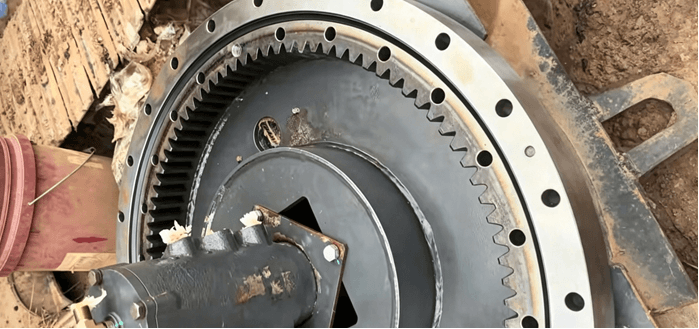
1. Comparison, Causes & Solutions of 5 Types of Abnormal Noise
Continuous Dry Friction Noise (Rustling / Scraping Sound)
Fault Causes: Depleted grease, overlong lubrication intervals leading to dry friction between raceways and steel balls without oil film; broken seals letting sediment in, hard particles causing abrasive friction; oxidized grease after long-term shutdown.
Detection Method: Check grease output from nipples and damaged mud-leaking seal lips; disassemble one seal to inspect oil shortage and metal debris on raceways.
Solutions: Inject fresh matching grease at all circumferential nipples until even overflow from seals; replace damaged seals directly; clean raceway impurities and run no-load low-speed for 30 minutes for running-in.
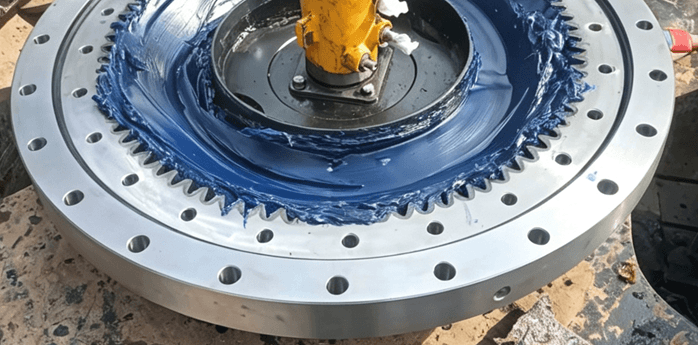
Intermittent Clicking Noise (One crisp sound at fixed position per rotation)
Fault Causes: Pitting indentations or local spalling on raceways; broken steel balls, worn missing spacers; loose bolts causing slight bearing displacement and fixed-point gear collision.
Detection Method: Rotate slowly by hand, mark the noise position, disassemble to inspect raceways and balls at the corresponding area; recheck bolt torque diagonally.
Solutions: Sufficient lubrication to ease slight indentations temporarily; replace bearing once spalling or broken balls appear; retighten loose bolts diagonally in stages to rated torque.
Low Continuous Rumbling Noise (Worsens under Heavy Load)
Fault Causes: Large-area raceway wear and excessive clearance; unevenly worn steel balls causing rolling jitter during operation; excessive gear backlash with continuous impact under heavy load.
Detection Method: Measure gear backlash with feeler gauges; test bearing axial and radial clearance against factory standards; disassemble to check overall raceway wear width.
Solutions: Increase lubrication frequency for slight excessive clearance; replace slewing bearing directly if clearance is seriously out of tolerance or raceways are widely worn; fine-tune drive gear shims to reduce meshing backlash.
Sharp High-Frequency Whistling Noise (Obvious at High Slewing Speed)
Fault Causes: Insufficient gear backlash leading to high-speed meshing overheating and scuffing; wrong grease grade with fast oil film breakdown at high temperature; misalignment between motor pinion and bearing gear ring.
Detection Method: Re-measure backlash at gear ring runout high point; verify grease NLGI grade and base oil type; inspect flatness of motor mounting flange.
Solutions: Add drive gear shims to enlarge backlash; replace special grease matching working conditions; correct motor centering deviation and repair deformed flanges.
Heavy Intermittent Knocking Noise (Clearest at Startup & Stop)
Fault Causes: Gear surface pitting and tooth root cracks causing impact under sudden load change during startup/shutdown; deformed machine mounting base leading to eccentric bearing load; loose large steel cage hitting inner wall.
Detection Method: Wipe gear anti-rust grease and visually inspect tooth root cracks and pits; test flatness of upper and lower flanges; disassemble to check cage fixation.
Solutions: Shorten maintenance cycle and strengthen lubrication for slight gear pitting; replace bearing or straighten frame if tooth root cracks or base deformation exist; fasten loose cages.
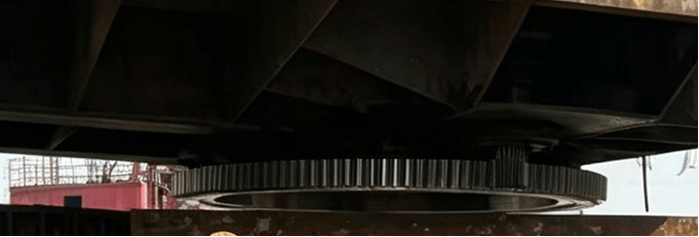
2. General Operation Steps for Abnormal Noise Diagnosis
Distinguish noise source under no-load: Rotate at low speed without load to eliminate digging/lifting interference, confirm noise only comes from slewing mechanism, and tell raceway noise apart from gear meshing noise.
Mark noise position: Rotate slowly without power for a full circle, record the fixed angle where noise appears to narrow troubleshooting scope.
Lubrication pre-test: Run test after fully filling grease into raceways and gear cavity. If noise drops obviously, the fault is oil shortage or dry friction; unchanged noise indicates hard mechanical damage such as wear or deformation.
Retightening recheck: Retighten all connecting bolts diagonally to eliminate knocking noise caused by loose displaced bolts, then recheck noise condition.
In-depth disassembly inspection: Disassemble flanges to check physical damage of raceways, steel balls, gears, seals and cages if the first four steps fail to eliminate noise.
3. Critical Maintenance Reminders
Do not operate long-term with abnormal noise: Noise indicates existing bearing damage; continuous operation accelerates wear, raising repair cost by 3~10 times and even causing full machine shutdown in severe cases.
Do not cover faults by only refilling grease: Lubrication merely eases friction noise, and cannot repair hard mechanical damage like spalling, broken teeth or deformation, which only treats symptoms instead of root causes.
Adjust solutions by working conditions: Prioritize gear backlash and bolt torque inspection for heavy mining crushing equipment; focus on seal water ingress and rust for outdoor high-humidity machines.
Summary
The five types of abnormal noise from slewing bearings correspond to a clear fault map. Maintenance staff can quickly locate root causes based on noise timbre and occurrence timing, follow the standardized diagnosis flow of "no-load positioning — lubrication test — bolt recheck — disassembly inspection", distinguish soft faults from insufficient lubrication and hard damage of raceways/gears, and carry out targeted treatment. This avoids wasted working hours on ineffective repairs, stops losses in time, and extends the overall service life of slewing bearings.
About BRISK: 13 years OEM-compatible slewing bearings & construction machinery parts. Visit https://www.briskslewing.com | Contact: [email protected]