When construction machinery is parked for more than 3 months, the grease inside slewing bearings will delaminate and oxidize, the raceways will form indentations under long-term unilateral static load, seals will age statically, and gear surfaces will corrode from moisture. Direct no-load or loaded startup easily leads to slewing jamming, abnormal noise and premature wear. This article first introduces storage environment standards and periodic inspection rules during shutdown, then fully breaks down the 9 standardized restart steps after 3-month parking, with critical risk reminders to avoid irreversible bearing damage caused by improper restart.
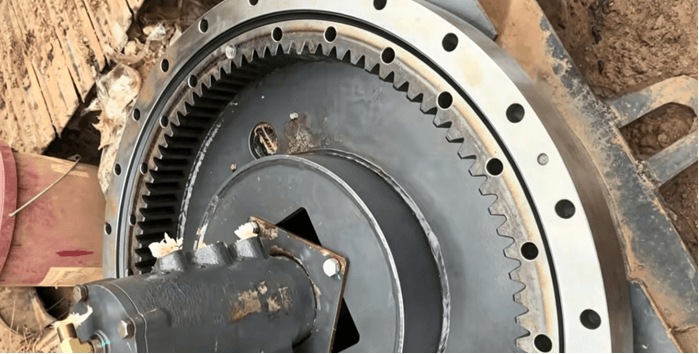
1. Long-Term Storage Environment & Periodic Shutdown Inspection
Standard Storage Requirements
- Environment: Indoor dry and ventilated warehouse is optimal. For outdoor parking, fully cover with rainproof dust tarpaulin to avoid long-term adhesion of rain, dew and dust on seals and gear rings;
- Posture: Adjust machine parking posture every 30 days to change the bearing’s load-bearing point, preventing permanent indentations from continuous pressure on the same raceway position;
- Protection: Evenly coat anti-rust grease on exposed gear surfaces, clean outer seals and install dust-proof covers.
Monthly Inspection Items During Shutdown
Three basic inspections must be completed monthly to greatly reduce restart failure risks:
- Visual check for cracked seals, grease leakage and accumulated mud;
- Manually rotate the bearing 1~2 small full circles to release static stress;
- Top up a small amount of grease to replace oxidized deteriorated old grease inside.
2. 9-Step Standard Restart Procedure for Bearings After 3-Month Shutdown
Step 1: Full Machine External Cleaning
Thoroughly clean dust, sediment and fallen leaves on bearing outer ring, gear surfaces, outer seals and grease nipples to stop impurities entering raceways during greasing and causing abrasive wear.
Step 2: Non-Destructive Visual Seal Inspection
Walk around the full bearing circle to inspect seals for hardening, cracking, falling off and water rust traces. Replace damaged seals completely before restart if elasticity is lost.
Step 3: Full Refill of Fresh Grease at All Nipples
Use fresh grease matching working conditions, inject pressure sequentially through all grease nipples while slowly rotating the bearing manually, until fresh grease overflows evenly from all seals to fully replace delaminated oxidized old grease inside.
Step 4: Unpowered Slow Full Manual Rotation
Cut off machine hydraulic power, manually rotate the bearing slowly for 3 full circles without power. Feel for jamming and abnormal resistance at all times. Do not force rotation if local sticking occurs; disassemble to check raceway indentations and rust.
Step 5: Gear Backlash & Gear Surface Rust Inspection
Wipe off gear anti-rust grease and inspect for pitting, rust spots and meshing scratches. Re-measure gear backlash with feeler gauges; rust during parking changes meshing precision, adjust drive gear shims if backlash exceeds standard range.
Step 6: Full Bolt Torque Recheck & Retightening
Long static parking causes stress relaxation on connecting bolts. Re-measure torque of all bearing fixing bolts via diagonal staged tightening; retighten all bolts with torque attenuation over 15% to rated standard torque.
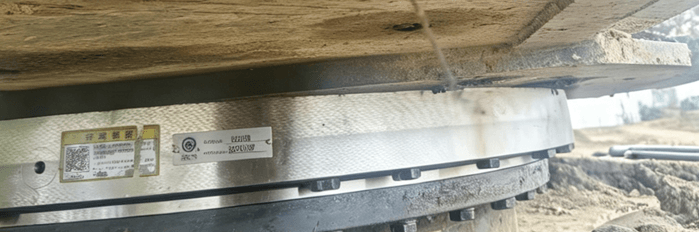
Step 7: No-Load Low-Speed Hydraulic Test Run
Start hydraulic system without digging or lifting loads, rotate forward and backward continuously at minimum slewing speed for 5 minutes, monitor abnormal noise, vibration and grease leakage.
Step 8: Stepwise Light Load Gradual Loading Test
Increase load in three stages: 30% rated load for 10 minutes → 60% rated load for 10 minutes → full rated load test run for 15 minutes. Stop to recheck lubrication and seals after each stage.
Step 9: Secondary Lubrication & Seal Recheck After Restart
After loaded test run, top up grease again and clean overflow impurities on seals. Record restart status and grease replacement time, update machine maintenance log and set regular follow-up maintenance intervals.
3. Critical Reminders for Restart After Long Shutdown
- Forbid direct full-load startup: The lubricating film on raceways fails after 3-month parking; instant heavy load will scratch raceways and cause permanent pitting damage;
- Do not skip manual rotation step: Raceway indentations formed during static parking cannot be eliminated by hydraulic power alone, forced operation will accelerate wear;
- Fully replace old grease: Delaminated oxidized grease loses protective performance; minor top-up cannot restore lubrication;
- Prioritize waterproof seal inspection for outdoor parked machines: Rainwater intrusion easily triggers electrochemical raceway rust, the most common failure source after long shutdown.
Summary
The core logic for restarting slewing bearings after 3-month shutdown is “replace protective grease first, eliminate static stress second, verify load step by step”. Strictly follow the 9-step procedure together with monthly shutdown inspections to fully avoid rust, indentation and seal failure caused by long static storage, restore the bearing’s designed service life, and greatly cut post-restart repair costs and machine downtime losses.
About BRISK: 13 years OEM-compatible slewing bearings & construction machinery parts. Visit https://www.briskslewing.com | Contact: [email protected]